Published
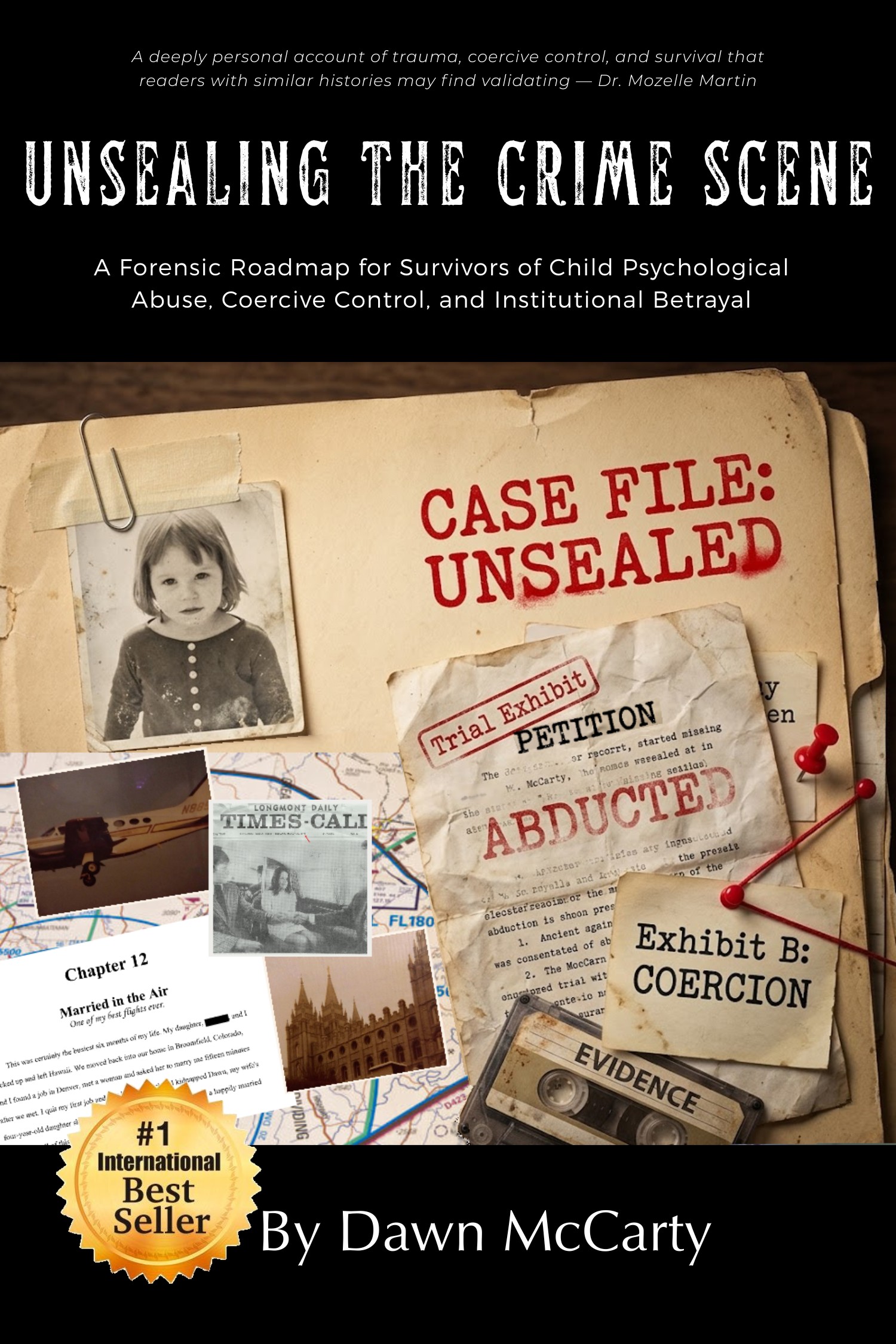
Unsealing The Crime Scene
A forensic roadmap for survivors of child psychological abuse and coercive control, featuring the DARE Framework.
Resources From Securing Everything
Decode The Pattern. Preserve The Evidence.
Books, briefings, established models, original frameworks, and field tools for recognizing coercive systems, behavioral threats, and the human breach.
Available Now
This library is curated rather than exhaustive. Begin with the resources that establish Dawn’s criminology-first approach, then move into the models and disciplines that inform her analysis.
Published
A forensic roadmap for survivors of child psychological abuse and coercive control, featuring the DARE Framework.
Intelligence Feed
Dawn’s articles and commentary on coercive control, cult dynamics, predator behavior, institutional blind spots, and the evidence beneath the story.
Briefings
Selected public education, behavioral analysis, forensic commentary, and framework applications from across the Securing Everything archive.
Forthcoming
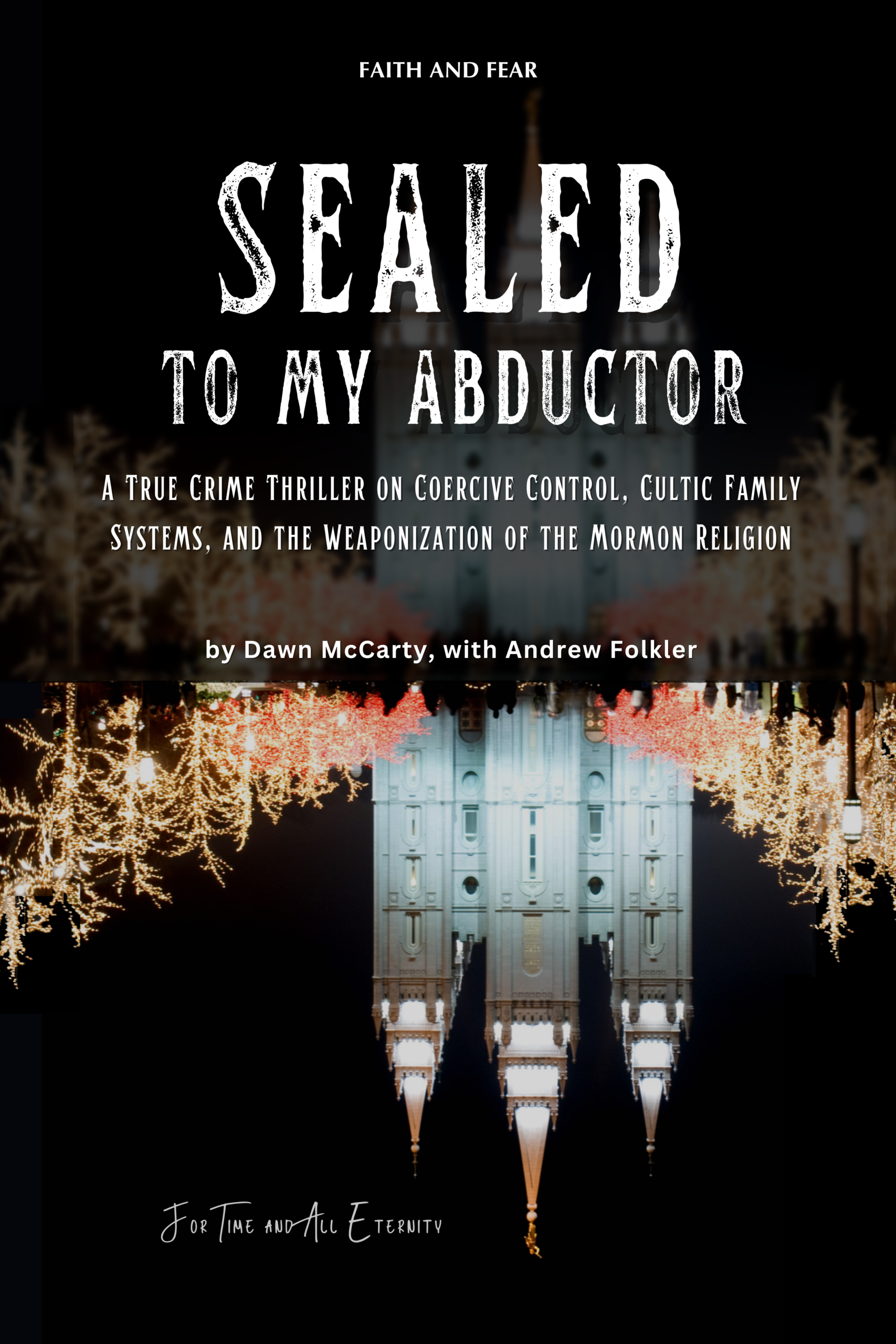
The memoir and case-file lane, including book details, the prologue, and supporting evidence-based materials as they are released.
Dawn’s Frameworks And Field Instruments
Dawn develops practical systems that organize evidence, expose repeated control tactics, and translate complex behavioral dynamics into language people can use. Resources are labeled by status so visitors can distinguish published work from tools still in development.
In Development
A structural pathway for identifying grooming sequences, access tactics, escalation, and early intervention points.
Featured In The Book
Forensic preparation instruments for organizing risk, documenting behavioral patterns, clarifying the record, and preparing defensible questions.
In Development
A field-oriented structure for recognizing vulnerabilities, preserving evidence, and strengthening the human perimeter.
Applied Method
Dawn’s cross-disciplinary method for comparing timelines, language, images, behavioral signals, documents, and competing explanations.
The Framework Crosswalk
Dawn’s original frameworks organize the investigation. Established models provide additional lenses for examining influence, conflict, behavioral risk, nonverbal communication, and coercive control. Each model remains the intellectual property of its creator.
Steven Hassan’s model examines behavioral, information, thought, and emotional control within authoritarian systems and relationships.
Chase Hughes’ work examines focus, authority, tribe, emotion, behavioral vulnerability, influence pathways, and rapid behavioral observation.
Joe Navarro’s framework supports recognition of recurring traits and behavioral patterns associated with potentially harmful personalities.
Bill Eddy’s Brief, Informative, Friendly, and Firm method provides a disciplined structure for responding to high-conflict communication.
Behavioral Observation
Dawn draws from Chase Hughes’ Behavior Ops Manual and Six-Minute X-Ray, Paul Ekman’s Emotions Revealed, and established work in nonverbal behavior. Behavioral and emotional cues are examined as contextual signals, never as stand-alone proof of deception, intent, or guilt.
Behavioral observation, influence mechanics, vulnerability, authority, and situational profiling.
Rapid observation of behavioral baselines, social needs, decision patterns, language, and nonverbal signals.
Paul Ekman’s research-informed work on emotion, facial expression, and emotional awareness.
Signals are compared against context, baseline behavior, corroborating evidence, alternative explanations, and the limits of the available record.
Forensic And Cyber Foundations
Dawn’s analytical approach is informed by formal education, professional practice, independent study, and specialized training across forensic examination and cybersecurity.
Katherine Koppenhaver’s Forensic Document Examination: Principles and Practice informs Dawn’s limited cold-case document examination work.
Coursework through Miami-Dade Police Department-based training supports image examination, evidence handling, and fingerprint foundations.
GIAC-aligned SANS training in digital forensics, incident response, and advanced network forensics informs Dawn’s cyber lens and timeline thinking.
Language patterns, document fragments, authorship indicators, narrative shifts, and timeline inconsistencies are evaluated within the wider evidence architecture.
Dawn’s Applied Method
Dawn integrates criminology, behavioral observation, forensic document examination, cyber-informed evidence analysis, forensic linguistic analysis, and pattern recognition sharpened by lived experience through her original Overlay Process.
Her mind notices relationships, behavioral indicators, danger signals, and inconsistencies that many people pass over. Lived experience is not treated as proof; it informs where she looks, while the method tests every perceived pattern against context, corroborating evidence, and competing explanations.
The method places multiple evidence layers into relationship: timelines, language, images, documents, behavioral signals, authority structures, digital traces, and competing hypotheses. No single cue is treated as proof by itself.
The objective is not to force certainty. It is to make the pattern visible, preserve the limits of the evidence, and ask stronger questions.
Keep The Library In Motion
Follow Unsealed for current analysis, or use the contact protocol for media, publishing, training, and professional collaboration inquiries.